
Mpox research initiative
Mpox research spanning genomics, serology and pathology
Tracking mpox virus evolution and immune cross-protection, from Kinshasa to Osaka.
- Period
- 2022 — ongoing
- Clades
- Ia · Ib · IIa · IIb
- Funding
- AMED · FY2022–2023 supplementary call
The question
Why mpox, now?
The mpox virus (MPXV) triggered successive Public Health Emergencies of International Concern (PHEIC) — clade IIb in 2022 and clade Ib in 2024. New variants keep emerging at a pace unusual for a DNA virus, yet the immunological evidence for how far past infection or vaccination cross-protects remains insufficient.
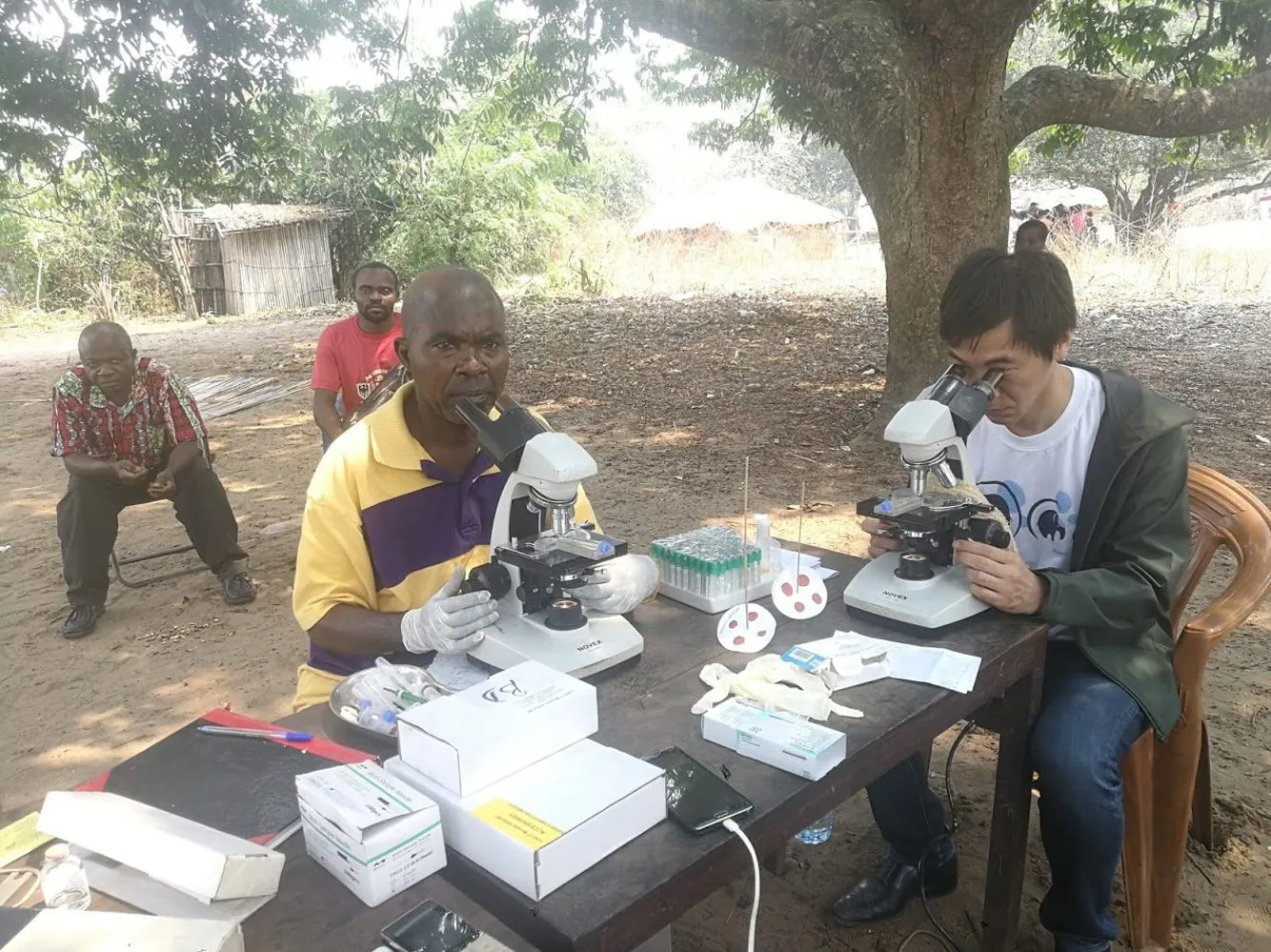
In the sequela cohort we follow in DR Congo, patients believed cured have shown lasting cases of social blindness from corneal opacity and peripheral neuropathy. With risks of immune-escape and highly pathogenic strains emerging, reading the contest between virus and immunity across genomics, serology and pathology is now required.
Partner institutions
Japan — Belgium — DR Congo
A three-country collaboration circulating specimens, data and findings.
Osaka Metropolitan University
Graduate School of Medicine
Serology platform development · integrated analysis
Developing whole-antigen bead assays and protein arrays, and integrating specimen data across the international cohort.
Ishikane, Adachi, Nakamura, Kaku, Yasuki
INRB
Institut National de Recherche Biomédicale
Case cohort · sequela follow-up
Tracking confirmed cases from Kinshasa, providing clade Ia specimens and one year of sequela data.
Dr. Placide Mbala
Institute of Tropical Medicine, Antwerp
Institute of Tropical Medicine, Antwerp
Method validation in an international cohort
Validating the serodiagnostic algorithm with European clade IIb specimens and analyzing regional differences.
Dr. Laurens Liesenborghs
Specimens and data circulate across the three countries to continuously validate and refine the serodiagnostic algorithm. The network runs on three axes: joint research and publication, and young-researcher exchange.
Approach
Layering genomics, serology and pathology on a single specimen.
We render the whole picture of mpox — which no single method can capture — from four layers.
Layer 01
Genomics
ゲノミクス
Using de novo assembly to determine full-length genomes including the hard-to-reconstruct ends, comparing insertions, deletions and repeats between strains to trace clues to transmission.
Layer 02
Epidemiology
疫学
Tracing the relationship between genotype and transmission pattern, and drawing the clinical picture through a one-year post-recovery sequela cohort.
Wawina-Bokalanga et al., Lancet 2025;406:63–75
Layer 03
Serology
血清学
Using whole-antigen bead assays and comprehensive protein arrays to elucidate antigen patterns reflecting neutralizing activity and cross-immunity between infection and vaccination.
Viruses 2023;15(4):995 · BMC Infect Dis 2025;25:529
Layer 04
Pathology
病理学
Infecting 3D skin-mimicking cultures with the virus to observe tissue disruption and replication dynamics, feeding into future drug-discovery and immunology platforms.
Viruses 2023;15(8):1748
Sub-topics
Entry points
Expanding into five themes.
Genomics
MPXV whole-genome analysis and phylogenetic surveillance through strain comparison
Epidemiology & natural history
Elucidating transmission dynamics and one-year post-recovery sequela follow-up
Seroepidemiology
Elucidating cross-immunity via whole-antigen assays and AMED-supported platform development
Pathology
3D culture skin models and analysis of viral replication dynamics
POCT development
Field-ready rapid diagnostics using LAMP